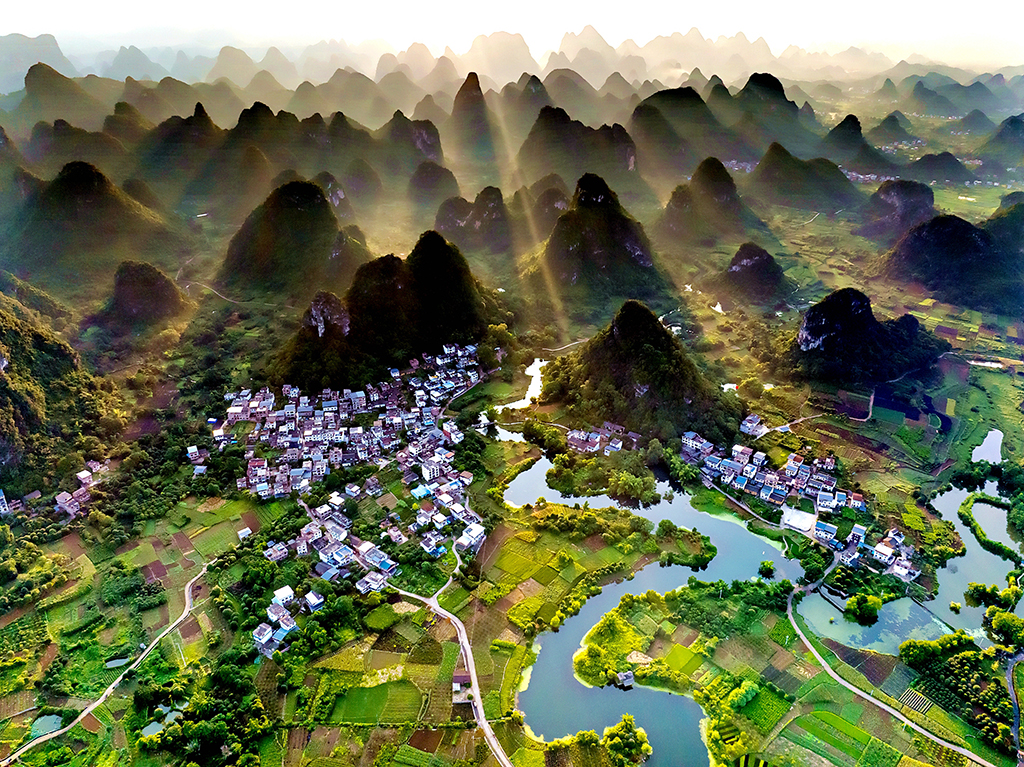
South China Karst
Introduction
The South China Karst is a vast and unique natural landscape located in the southern part of China, covering approximately 550,000 square kilometers. Spanning multiple provinces and municipalities including Guizhou, Guangxi, Yunnan, and Chongqing, it is recognized as one of the most spectacular examples of humid tropical to subtropical karst landscapes in the world. The South China Karst is characterized by its incredible diversity of karst formations, including towering limestone peaks, vast cave systems, and stunning riverine landscapes. This region is significant not only for its geological and aesthetic features but also for its rich biodiversity and cultural heritage.
The South China Karst includes Yunnan's Stone Forest (Shilin), Guizhou's Libo, and Chongqing's Wulong in its first phase, designated as a World Natural Heritage Site in 2007. The second phase comprises Guangxi's Guilin, Guizhou's Shibing, Jinfo Mountain in Chongqing, and Huanjiang in Guangxi, added to the World Heritage List in 2014. This recognition highlights the area's global importance as a natural site, offering a window into the complex geological processes that have shaped the Earth's surface over millions of years.
Geological Features
The South China Karst is renowned for its remarkable geological features that have been formed through millions of years of natural processes. It provides an outstanding example of karst landform development, showcasing a wide variety of karst phenomena such as stone forests, sinkholes, caves, and natural bridges. The region's geology offers insight into the Earth's evolutionary history and the dynamic processes that continue to shape the landscape.
Rock Formations
One of the most iconic features of the South China Karst is its diverse array of rock formations. The Shilin Karst, also known as the Stone Forest, is perhaps the most famous, featuring towering limestone pillars that resemble a forest made of stone. These formations have developed over 270 million years and are a testament to the powerful forces of erosion and weathering that have shaped the landscape. The Libo Karst is known for its Fengcong and Fenglin karsts, characterized by tall karst peaks and isolated limestone islands. These formations are a result of the dissolution of dolomitic and limestone rocks, which have been sculpted into intricate and awe-inspiring shapes.
Cave Systems
The South China Karst is home to some of the most extensive and spectacular cave systems in the world. The Wulong Karst, for example, features giant collapse depressions known as Tiankeng, which contain exceptionally high natural bridges and deep unroofed caves. These caves have been formed over millennia as meteoric water, rich in carbonic acid, dissolved the soluble limestone and dolostone, creating vast underground networks. The cave systems in the region are not only geological wonders but also serve as important habitats for a wide range of species, some of which are endemic to the area.
Biodiversity
The biodiversity of the South China Karst is as impressive as its geological features. The region's intact forest cover and natural vegetation provide crucial habitats for numerous rare and endangered species. The Libo Karst, for example, hosts a rich array of vascular plants, vertebrate animals, and insects, contributing to the area's high biodiversity conservation value. The karst forests are unique ecosystems where life has adapted to the challenging conditions of alkaline soils and limited soil retention, showcasing the resilience and indomitability of nature.
Cultural and Historical Importance
The South China Karst is not only a natural wonder but also a region of significant cultural and historical importance. The karst landscapes have been an integral part of the local culture, influencing traditional practices and beliefs. The unique geological features have also inspired countless generations of poets, artists, and scholars, who have celebrated the region's beauty in their works. The karst mountains, rivers, and caves hold cultural and spiritual significance for the local communities, serving as sites for traditional rituals and ceremonies.
Conservation Efforts
Conservation efforts in the South China Karst are focused on preserving its unique geological features and rich biodiversity while also supporting the sustainable development of local communities. The designation of the region as a UNESCO World Heritage Site has brought international attention to the importance of conserving this natural treasure. Ongoing conservation initiatives include habitat protection, biodiversity monitoring, and community engagement programs aimed at promoting sustainable tourism and economic development. These efforts ensure that the South China Karst remains a vital and thriving ecosystem for future generations to explore and appreciate.








